Introduction
A beautiful garden path can change the way your entire outdoor space looks and feels. It can turn a simple backyard into a peaceful retreat, create a welcoming entrance, or connect your favorite garden spots with style. The best part is that you do not need an elaborate landscape to make it work.
These 5 beautiful garden pathways design ideas offer inspiration for different garden styles, from rustic woodland paths to clean, modern walkways and classic brick entrances. You will find natural wood stepping stones surrounded by colorful flowers, curved wooden boardwalks, square pavers set in gravel, irregular flagstone paths, and traditional brick walkways framed by green hedges.
Whether you are refreshing a small backyard or planning a larger landscape, these ideas can help you create a garden path that looks attractive and serves a practical purpose.
Final Takeaway
The right garden pathway brings together beauty, function, and the natural features of your outdoor space. Rustic wood works well for a relaxed garden, gravel and square pavers create a neat appearance, flagstone blends beautifully with natural landscaping, and brick adds a timeless, traditional touch.
1. Rustic Tree-Stump Garden Pathway With Colorful Flower Borders
A garden path made from natural wood slices brings a woodland feel to an outdoor space. In this image, round tree-stump sections in different sizes form a winding walkway, while purple, pink, white, and blue flowers fill the beds along the sides. The old stone walls, leafy plants, and wooden bench make the garden feel like a quiet cottage retreat.
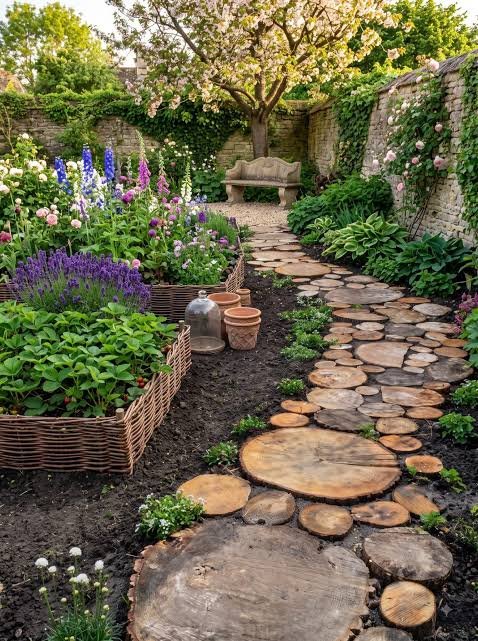
The best detail is the mix of shapes. Large wood rounds create stepping points, while smaller pieces fill the gaps and keep the path looking informal. Woven raised planters add another layer of texture without competing with the flowers.
To recreate this idea, choose naturally weathered-looking wood rounds, arrange them along a gentle curve, and surround them with low-growing plants. Use flowers in a few related colors instead of filling every space with different shades.
2. Curved Wooden Boardwalk for a Relaxed Garden Retreat
The second design takes a different approach, using a raised-looking wooden walkway that bends gently through pale gravel and ornamental grasses. The rich brown boards stand out against the light ground, while two white outdoor chairs create a natural destination at the end of the path.
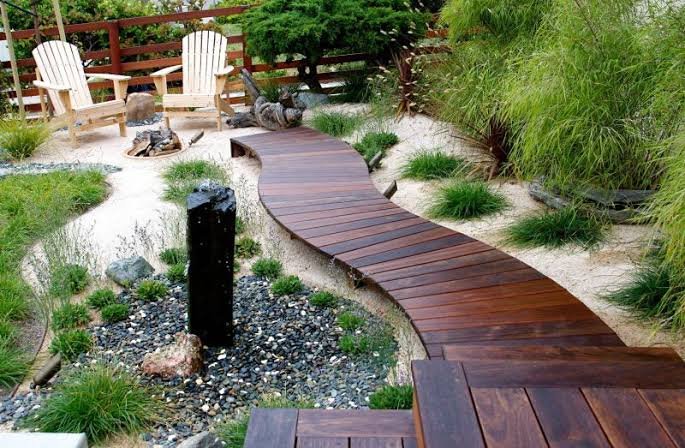
What makes this design work is the contrast between straight boards and a curved route. The wood gives the garden a warm, organized feel, while the loose planting softens the edges. Instead of filling every corner with flowers, the design leaves open gravel areas that help the pathway stand out.
How to get a similar look:
💡 Design Tip: Let the Curve Lead
Place a bench or pair of chairs where the path naturally ends. This gives the walkway a destination and makes the garden feel planned rather than simply divided into sections.
- Plan a gentle curve toward a seating area or quiet corner.
- Use outdoor-rated timber or suitable composite decking in a warm brown shade.
- Surround the walkway with pale gravel, ornamental grasses, and a few larger rocks.
- Add simple seating to give the path a clear purpose.
3. Large Square Stepping Stones Set in Decorative Gravel
Clean lines make this pathway stand out. Large, pale square slabs are spaced evenly through a bed of small gray and white pebbles. Stone edging keeps the gravel contained, while colorful flowers along one side and a potted plant on the other bring softness to the geometric layout.
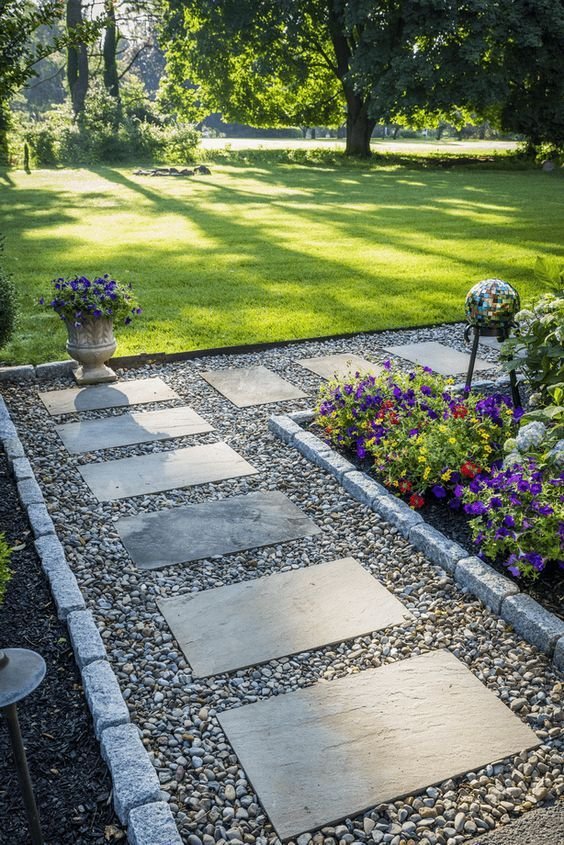
This is a useful idea for homeowners who prefer a tidy garden without losing the natural feel of stone. The repeated squares create a steady rhythm, and the gravel fills the gaps without adding another strong pattern.
For a similar result, select stepping stones with a consistent shape and color. Lay them out before installation to check the spacing feels comfortable for your natural walking stride. A compacted, well-drained base helps prevent stones from shifting over time.
4. Natural Flagstone Pathway With a Layered Rock Garden
For a garden that feels connected to its natural surroundings, irregular flagstones are a strong choice. This pathway curves between shrubs, ornamental grasses, and large boulders, with smaller smooth stones filling selected areas around the rocks.
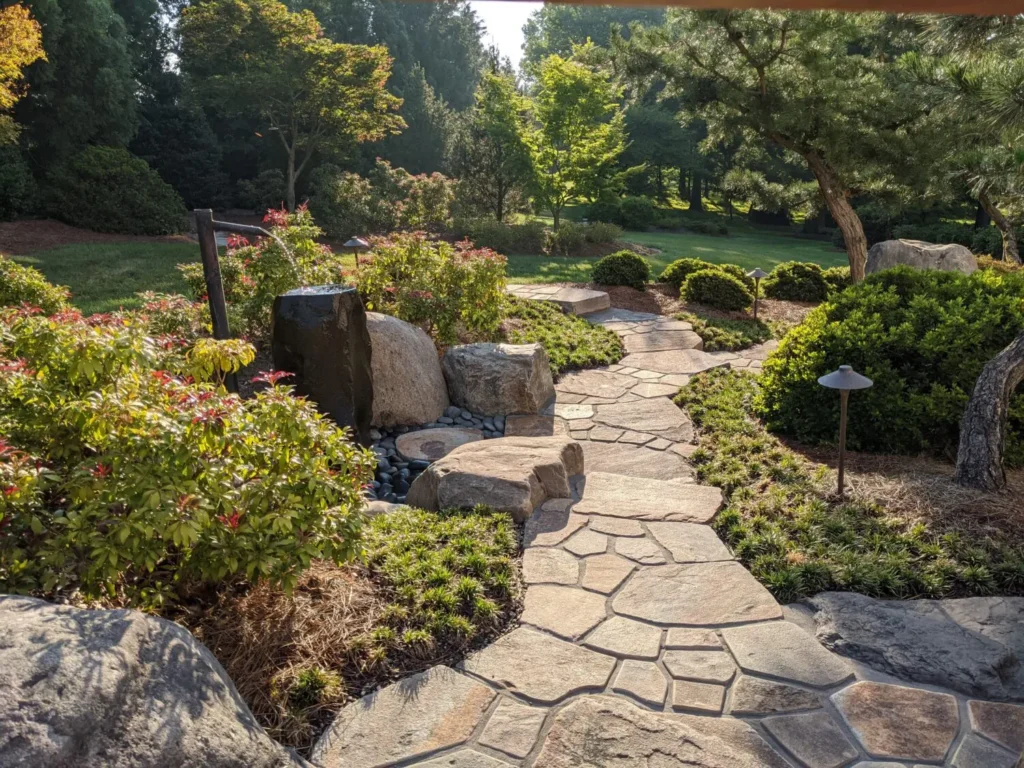
The appeal comes from the uneven stone shapes and the changes in texture. Each slab has its own outline, so the walkway feels less formal than a path made from matching pavers. Low evergreen plants help frame the route without hiding the stones.
Notice how the larger boulders are grouped beside the walkway rather than spread evenly throughout the garden. That simple choice creates visual interest and makes the planting feel more natural.
Combine broad flagstones with smaller natural stones.
Frame the route with compact shrubs and grasses.
Place outdoor path lights along the edges for evening use.
5. Classic Brick Garden Pathway Framed by Flowering Trees
A brick pathway creates a more formal entrance, especially when it leads toward a garden gate. In this image, warm red and brown bricks form a herringbone pattern, while neatly trimmed green hedges create matching borders on both sides. Flowering trees arch overhead, bringing pink blossoms into the scene.
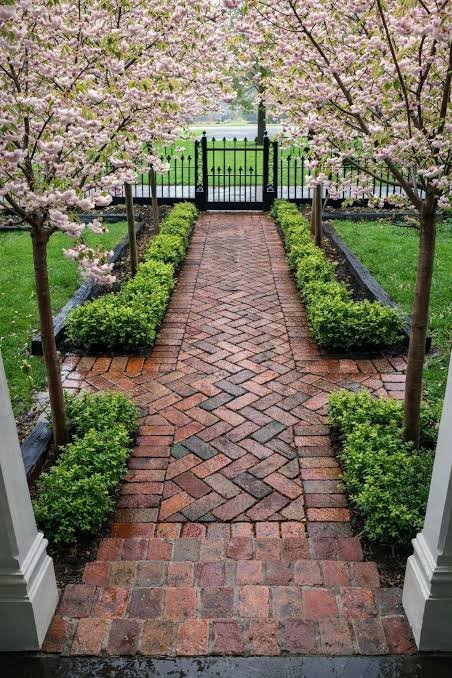
The brick pattern is the key detail. It adds visual movement to an otherwise straight path, while the repeated hedge shapes keep the overall design balanced. The combination of brick, green foliage, and pale blossoms also creates a gentle color contrast that works across many traditional garden styles.
To adapt this idea for a home garden, choose brick pavers in warm earthy shades and use compact shrubs to create clean borders. Flowering trees can add seasonal color, but select varieties suited to your local climate and available space.
Your five image-based entries are complete. Send more images if you want to expand the list, or say “done” when you’re ready for the article title, introduction, and conclusion.